Guide
Foods and Brain Fog: What to Eat, What to Watch and Why the Evidence Is Mixed
Which foods may help a foggy head, which are linked with worse thinking, and why the research is less certain than food lists online make it sound.
Last updated November 12, 2026.
A small first step
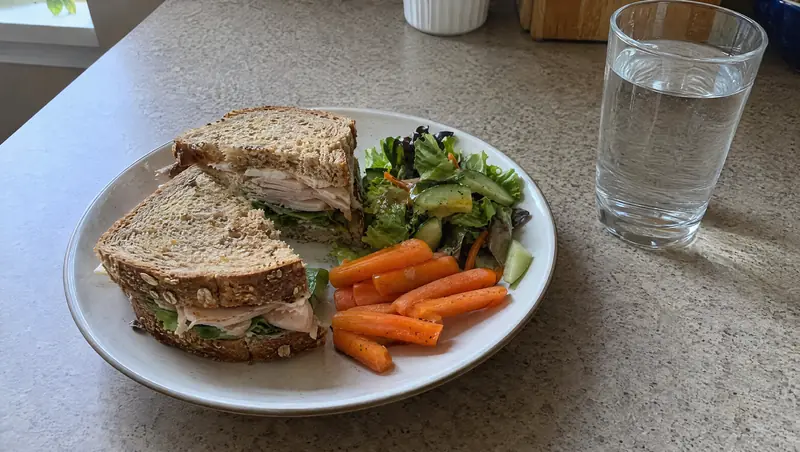
- Pick one meal you eat most days and add one thing from the 'eat more of' column, like a handful of beans, a piece of fruit or a swap to whole-grain bread. Keep everything else the same for a week.
“Brain fog foods to eat.” “Seasoning-free foods clears my brain fog.” “Brain fog when eating too fast or with a device.” Food questions about fog tend to come from two directions. Some people want a list of things to add. Others have noticed that a certain meal, or a certain way of eating, leaves them slow and cloudy afterward, and they want to know if they’re imagining it.
You’re probably not imagining it. But the honest answer to “what should I eat?” is less exciting than most lists online, and it’s worth knowing why before you change anything.
What the research can and can’t tell you
Almost every study on food and thinking has three limits worth keeping in mind:
- It studies patterns, not single foods. Researchers look at whole ways of eating over months or years. A “superfood” for the brain is a marketing idea, not a research finding.
- It mostly studies older adults. The big diet studies were built to look at memory decline with age, not the foggy Tuesday afternoon of a 35-year-old.
- It measures test scores, not fog. “Brain fog” isn’t something these studies score. They use memory and thinking tests, which overlap with fog but aren’t the same thing.
So when a page promises that blueberries or walnuts will clear your head, it’s stretching findings that were never about that. What the research can do is point to a general direction.
Eat more of, watch, and what the evidence looks like
| Food or pattern | What the research looked at | How solid it is |
|---|---|---|
| Vegetables, fruit, whole grains, beans, nuts, fish and olive oil (Mediterranean, DASH and MIND-style eating) | A 2022 review of 13 studies in older adults found that sticking to the MIND diet was linked with better scores in some areas of thinking in most of them | Mostly observational, so it shows a link, not cause |
| The same MIND diet, tested head to head | A 3-year trial with 604 older adults found thinking scores improved in both the MIND group and a comparison diet group, with no clear difference between them | The strongest test so far, and it didn’t show an extra benefit |
| Ultra-processed food (soft drinks, chips, cookies, flavored cereals, packaged breads) | A study following about 30,000 people aged 45 and up linked a 10% higher share of ultra-processed food with a 16% higher risk of memory and thinking problems | Large but observational; the researchers say it shows an association only |
| Low versus high glycemic index meals (how fast a meal raises blood sugar) | A review of 11 studies found mixed results; a slower-release meal may favor thinking in adults, but the findings were called inconclusive | Small, mixed, short-term studies |
| Sugary drinks | Harvard’s Healthy Eating Plate and the DASH plan both suggest limiting them | Guidance for overall health, not fog research |
Two things stand out. First, the trial result matters: when researchers finally tested the MIND diet properly, both groups improved, and both were also eating a bit less and getting diet support. That suggests the general shift toward better eating may count for more than any special list. Second, the ultra-processed food link is real but modest, and it comes from questionnaires about what people ate, in an older group, counting memory and thinking problems found over about eleven years rather than day-to-day clarity.
What a “brain-friendly” plate looks like in practice
You don’t need a branded diet. The public guidance agrees on a fairly plain picture:
- Half the plate vegetables and fruit, in color and variety. Harvard’s plate doesn’t count potatoes as a vegetable because of their effect on blood sugar.
- A quarter whole grains like oats, brown rice, barley or whole-wheat bread, which Harvard notes have a milder effect on blood sugar than white bread or white rice.
- A quarter protein from fish, poultry, beans or nuts, with less red meat and processed meat.
- Vegetable oils such as olive or canola, rather than trans fats.
- Water, tea or coffee to drink, with sugary drinks kept for now and then. The NHS suggests 6 to 8 glasses of fluid a day, and fluid can affect clarity on its own (see dehydration and brain fog).
The DASH plan from the National Heart, Lung, and Blood Institute says it needs no special foods. That’s a useful reminder. Nothing on this list costs more than ordinary groceries, and none of it comes in a capsule.
When a meal seems to make the fog worse
Feeling dull after a big lunch is common, and it has its own guide: brain fog after eating. If your fog seems to follow sugary snacks or long gaps between meals, blood sugar swings may be the more useful read, and the slower-release foods in the table above are where that page picks up.
What about the person who felt clearer on seasoning-free food, or someone who suspects dairy, wheat or a spice? Individual reactions are possible, but they’re hard to pin down by feel alone. Fog has many causes that shift day to day: sleep, stress, caffeine, alcohol, how much you drank. A food can easily get the blame for a bad night’s sleep.
A safer approach than cutting things out:
- Keep a short symptom diary for two weeks: what you ate, when, how you slept, and how your head felt a couple of hours later.
- Look for a pattern that repeats, not one bad afternoon.
- If one food keeps lining up with fog, that’s worth bringing to a test or a dietitian before you drop it.
Cutting out whole food groups without a plan can backfire. You can end up short on fiber, B vitamins or iron, which brings its own tiredness. And if celiac disease is a possibility, going gluten-free before testing can cause incorrect results on the blood tests and biopsy used to check for it, according to Beyond Celiac. For the gut side of this question, see the gut-brain axis guide, which keeps to what’s known.
What about keto or fasting?
Some people go the other way entirely and cut carbs hard, so the body runs mostly on ketones, a fuel it makes from fat. Nate, who runs this site, has done it, and here’s how it went for him:
“As your body and brain adapt to using ketones for fuel, it can be a little rough in the beginning. Supporting yourself with coconut oil or MCT oil during the transition helped me. Once you’re in that state, the mental clarity is amazing compared to the fog I’d usually get from eating inflammatory foods.”
That rough patch at the start is something a lot of people describe when they first switch over. If you try it, give it some time before you judge it, keep your fluids up, and if you take medicine for blood sugar or blood pressure, talk to your doctor or pharmacist before making a big change to how you eat.
What about supplements?
Food lists often slide into supplement lists. Fish oil, B vitamins and “brain support” blends are sold everywhere. The research summarized above is about food, not pills, and it doesn’t tell you a capsule will do what a meal pattern might. Supplements can also interact with medicines, so a pharmacist is a good person to ask before adding one. If you might be low in something like B12, a blood test is how you’d actually find out.
Where to start
The temptation with food is to plan a total overhaul: new grocery list, meal prep Sunday, no sugar ever again. It rarely lasts, and it makes it impossible to tell what helped. A smaller change you’ll actually keep is a better place to begin.
So pick one meal, not every meal. Maybe breakfast gets oats instead of a pastry, or lunch gets a handful of beans or a side salad, or the afternoon soda becomes sparkling water three days out of five. Leave the rest of your eating alone for a week or two. If it sticks without much effort, add a second change. If your head feels the same, that’s useful too: it points you toward sleep, caffeine or the other causes in the guide to fog that won’t lift.
Food is one piece of a bigger picture. It’s a piece you can change a bite at a time, which is exactly why it’s a good place to start. For the wider plan, how to fix brain fog walks through finding the likely cause.
Sources and citations
- Brain Fog — Cleveland Clinic (leaves this site)
- Healthy Eating Plate — Harvard T.H. Chan School of Public Health, The Nutrition Source (leaves this site)
- Eating a balanced diet — NHS (leaves this site)
- DASH Eating Plan — National Heart, Lung, and Blood Institute (NHLBI) (leaves this site)
- MIND diet and cognitive performance in older adults: a systematic review (Critical Reviews in Food Science and Nutrition, 2022) — PubMed (leaves this site)
- Trial of the MIND Diet for Prevention of Cognitive Decline in Older Persons (New England Journal of Medicine, 2023) — PubMed (leaves this site)
- The influence of glycemic index on cognitive functioning: a systematic review of the evidence (Advances in Nutrition, 2014) — PubMed (leaves this site)
- Eating More Ultra-processed Foods Tied to Cognitive Decline, Stroke — American Academy of Neurology (leaves this site)
- Symptoms & Causes of Celiac Disease — National Institute of Diabetes and Digestive and Kidney Diseases (NIDDK) (leaves this site)
- Celiac Disease Testing — Beyond Celiac (leaves this site)
- Vitamin B12 or folate deficiency anaemia: Symptoms — NHS (leaves this site)